🏭 Main Types of Wastewaters Treated
- Municipal (Domestic) Wastewater: From households, offices, etc.
- Industrial Wastewater: From factories and industrial processes.
- Stormwater Runoff: Rainwater that may carry pollutants.
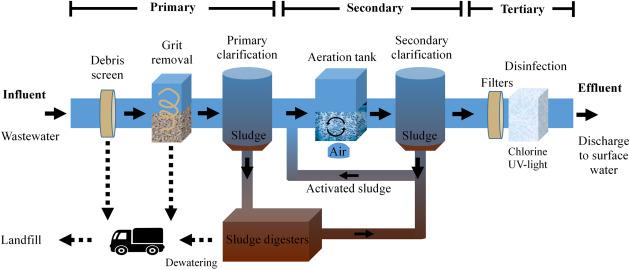
💧 Stages of Wastewater Treatment
1. Preliminary Treatment
- Purpose: Remove large solids and debris.
- Processes:
- Screening (removes rags, sticks, plastic, etc.)
- Grit removal (removes sand, gravel)
2. Primary Treatment
- Purpose: Settle out suspended solids.
- Process:
- Sedimentation tanks where solids settle as sludge.
- Scum (oils and grease) floats and is skimmed off.
3. Secondary Treatment
- Purpose: Remove dissolved organic matter using biological processes.
- Common Methods:
- Activated Sludge Process: Air and bacteria break down waste.
- Trickling Filters: Wastewater flows over a bed of rocks or plastic with microbial growth.
- Lagoons or Oxidation Ponds
4. Tertiary (Advanced) Treatment
- Purpose: Further purify the water (optional, depending on regulations).
- Processes:
- Filtration
- Nutrient removal (nitrogen, phosphorus)
- Disinfection (UV, chlorination)
♻️ Sludge Treatment
- Sludge from primary and secondary processes is treated separately.
- Processes include:
- Thickening
- Digestion (aerobic or anaerobic)
- Dewatering
- Final disposal or reuse (e.g., as fertilizer or biogas)
✅ End Products
- Treated Effluent: Clean water discharged to rivers, oceans, or reused.
- Biosolids: Treated sludge that can be used as soil conditioner.
- Biogas: From anaerobic digestion, can be used for energy.
🌍 Why Wastewater Treatment Is Important
- Protects public health.
- Prevents water pollution.
- Conserves water resources.
- Supports environmental sustainability.